
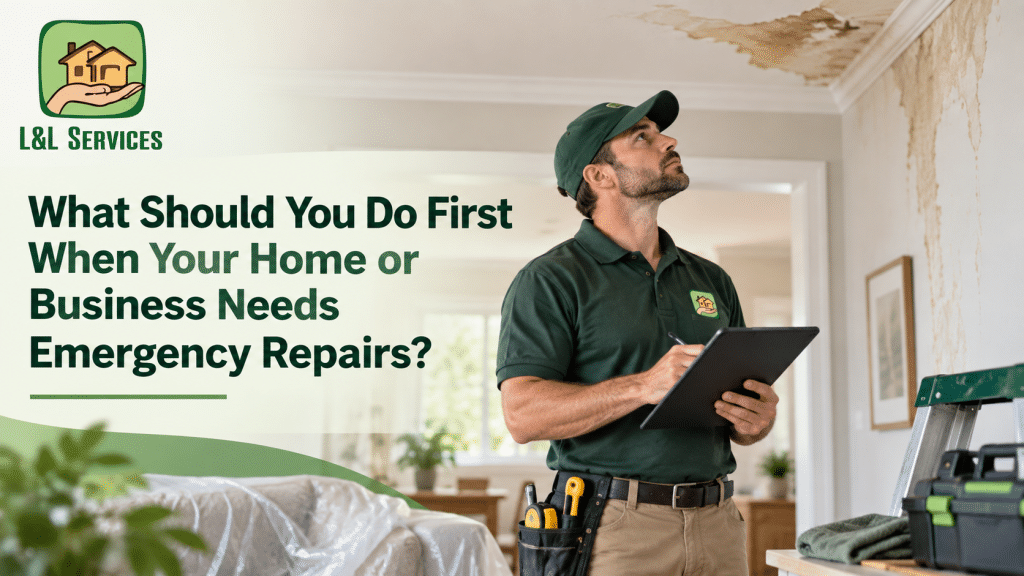
At L&L Services, we help homeowners, landlords, property managers, and business owners handle those unexpected emergency repairs throughout Reading, Philadelphia, Harrisburg, and surrounding areas.
You never know when a pipe bursts. Water starts coming through the ceiling. A storm exposes a roof leak. Something electrical suddenly doesn’t look right.
When property damage happens, most people have the same first thought: What do I do now?
The first few decisions matter. You want to keep everyone safe, prevent the damage from getting worse, document what happened, and get the right repair professional involved as quickly as possible.
Quick Answer: What Should I Do First During a Property Repair Emergency?
First, make sure everyone is safe and move away from any electrical, fire, structural, or contaminated-water hazards. When it’s safe to do so, stop the source of the problem, take photos or video of the damage, contact your insurance company when appropriate, and call an experienced emergency repair contractor.
Don’t wait for a small problem to become a much larger repair.
When Is a Property Problem Really an Emergency?
Some repairs can wait until next week. Others shouldn’t. A small cosmetic crack in a wall may not need immediate attention. Water pouring through that same wall is another story.
Call for help quickly when you’re dealing with:
- Active water leaks or burst pipes
- Roof leaks after a storm
- Fire or smoke damage
- Electrical problems that could create a safety risk
- Water entering walls, ceilings, or flooring
- Structural damage
- Damage that could allow more rain or weather into the property
We’ve seen how quickly water can travel beyond the area where the problem first appears. What looks like one wet spot on a ceiling may involve insulation, drywall, flooring, framing, or another level of the building.
What Should I Do When Water Is Coming Into the Building?
Stop the water when you can do so safely.
For a plumbing problem, that may mean shutting off the water supply. With a roof or exterior leak, your priority may simply be protecting people and belongings until the area can be properly evaluated.
Don’t start opening walls or pulling apart damaged materials unless you know it’s safe.
Water and electricity are a dangerous combination. When electrical outlets, wiring, fixtures, or panels may have been exposed to water, stay clear and get professional help.
Should I Take Pictures Before Repairs Begin?
Yes. Take photos and video before moving or cleaning damaged items when it’s safe to do so. Pennsylvania’s Insurance Department also recommends documenting property damage and keeping records and receipts related to a claim.
Photograph the source of the damage when possible, along with affected ceilings, walls, flooring, furniture, equipment, and belongings. (A few extra photos can be very helpful later).
Who Should I Call for Emergency Repairs?
Look for someone who can see the bigger picture.
An emergency sometimes involves more than one trade. A leaking pipe may lead to damaged drywall and flooring. A roof leak may uncover water damage inside the walls. Fire damage can affect several parts of a room.
Our team handles general contracting and emergency repairs, including water and fire damage, minor plumbing, electrical work, flooring, masonry, and other property repairs. We also work with homeowners, business owners, landlords, property managers, real estate professionals, and insurance adjusters.
Instead of trying to figure out which contractor should come first, you can start with one call.
Can I Wait to Repair Water Damage?
Usually, waiting isn’t a good idea. Even after the visible water stops, moisture can remain inside walls, beneath flooring, around framing, or behind exterior materials.
We also specialize in water intrusion related to improperly installed stone veneer and brick. We’ve seen cases where moisture has been entering a structure for much longer than the property owner realized.
A stain, soft spot, musty smell, warped floor, or recurring damp area deserves attention.
Do Emergency Repairs Apply to Commercial Properties Too?
Absolutely. A repair emergency at a business creates another concern: keeping the business operating. A water leak, damaged flooring, lighting problem, or other building issue may affect employees, customers, inventory, or normal business hours.
We provide 24/7 repair services for residential and commercial properties and understand that some commercial work needs to happen after hours.
Our service area extends from the Reading area toward Harrisburg and Philadelphia, the Poconos, and Northern Delaware.
What Should I Keep in Mind During an Emergency?
Remember these five steps:
- Keep people safe.
- Stop the source when it’s safe to do so.
- Protect the property from additional damage.
- Photograph and document what happened.
- Call for professional help.
You don’t need to diagnose the entire problem yourself.
That’s our job.
Need Emergency Repairs? Start With One Call.
Property damage is stressful enough without wondering who handles the plumbing, who repairs the wall, and who fixes the floor afterward.
At L&L Services, our goal is to help you understand what happened, what needs attention first, and what it will take to make the repair correctly.
Should you have an emergency repair at your home, rental, or commercial property in Reading, Philadelphia, Harrisburg, or the surrounding region, give us a call.
One call can help get the repair moving in the right direction.
Frequently Asked Questions
Does L&L Services provide emergency repairs?
Yes. We provide emergency repair services for residential and commercial properties, including water and fire damage and other building repairs. Need help? Feel free to contact us today.
Do you provide emergency repairs in Philadelphia?
Yes. Our Eastern Pennsylvania service area extends from Reading toward Philadelphia and Harrisburg, as well as the Poconos and Northern Delaware.
What should I do first after water damage?
Make sure the area is safe, stop the source when possible, document the damage, move unaffected belongings away from the water, and contact a repair professional.
Should I contact my insurance company before making repairs?
For damage that may involve an insurance claim, contact your insurance company promptly and document the damage before cleanup or repairs whenever it’s safe to do so.
Can L&L handle more than one type of repair?
Yes. We provide a range of general contracting and property repair services, which can be especially helpful when one emergency affects several parts of a building.
Do you work with landlords and property managers?
Yes. We work with homeowners, landlords, property managers, real estate professionals, businesses, and insurance adjusters.
Sources:
Pennsylvania Insurance Department – Natural Disaster Insurance Guide — supports the advice to contact the insurance company promptly, photograph or video damage before cleanup, prevent additional damage, and save receipts.
Pennsylvania Natural Disaster Insurance Guide
Ready PA – After the Disaster — supports contacting the insurer, documenting losses with photos/videos and receipts, and taking reasonable steps to protect damaged property.
Guide to assist after a disaster.